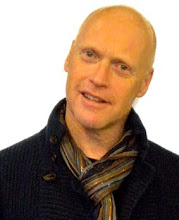
In memory of Amy Szostak

Amy Szostak (1975-2009)

For about 5 years along with Chris Barrand and Brooke Dallimore
I supported Amy with her art practice.
The first time Amy came into the studio of Art Compass she screamed!
Angy at people who patronised her.
Soon we gained her confidence and trust,
With that Amy’s amazing artistic journey began.
Just before Art Compass closed
We managed to round off Amy’s Raidar the Viking story:
Under the title: Scream! Jorunn’s Saga
It went on air as a radio play in 2006.

The story is really a kind of autobiography,
A collection of the complex parts that made up Amy.
Every character in the story IS a part of Amy,
A realised part, or a part she aspired to.
Simultaneously all characters were modeled on real people,
And the imagined and real relationships with them
She illustrated her story skillfully in her unique style.
She created well over 100 pieces,
A collection worth preserving
A collection worthy to be included in national archives of New Zealand!

Amy was a unique (outsider) artist, singer, songwriter, composer and writer
She called herself "Special Star" as she hated the label "special needs"
Amy was indeed a special star.
She sought fame, First of all for herself
But also with a much bigger goal in mind
She wanted recognition, fame, happiness and success for all those
who are marginalized because they live with a disability of sorts.
She was an advocate, a fighter,
Sadly her body gave up
Before her lively spirit completed its mission

Amy, it was a great privilege to work with you.

Click HERE and you will be taken to Amy's story. You can listen to the radio play or read the script.

Himalayan Collection (pastel drawings)

This collection was created in 2005 during a 10 day visit to Ladakh in Northern India, an area with Tibetan culture and architecture. The capital Leh is so high that you need a couple of days to get used to the altitude and thin air. It took two days by jeep accross a number of passes between 4000 and 5600m to get there, an amazing journey, met some great people. I did a lot of filming too, some of which will be included in the feature length documentary I am working on.


'Lest We Forget'


During my time in Europe I have come across many reminders of World War II; scars in buildings, people, countrysides, attitudes, political systems, etc. This image is from 'The Gate of Death'. It's significance and seeing it for real sent shivers down my spine that stopped me in my tracks as I approached the former concentration camp Auschwitz I. Entering Auschwitz I, now a museum, is free (of charge) these days, so is leaving.

Many minorities were targeted for extermination by the Nazi's. 'Lest we forget' is a sentiment often heard and used as the reason why places like Auschwitz should be preserved. I could not help but notice that not all minorities who were singled out for extermination by the Nazi's were remembered through words, images, anecdotes or statistics. Unlike others they were not given a 'human face' in the exhibitions.

I found no references of any kind to those exterminated because they had an intellectual disability or mental illness. I only found a single reference to homosexuals in a display that explained the different badges prisoners were forced to wear for identification, such as the yellow star identifying Jews and pink triangles identifying homosexuals.


When I asked various museum staff about where I could find references to crimes committed to these minorities they did not have an answer, they did not know! If they don't know, how can the public at large ever find out? How can ignorance be transformed into awareness?

Leaving these crimes invisible creates a danger zone, a zone of shadow, the shadow side of being human, the zone where crimes are committed.

It is light itself that exposed Auschwitz I & II eventually. Without light we are lost, I am lost, without light I cannot be an artist, without Light I am back in the dark 'closet' , without light I cannot be me, without light I do not exist, therefor it is Light I will continue to seek even in dark places like Auschwitz.

'Frei'(German for free) the last word seen before prisoners entered the 'Gate To Death' to Auschwitz I.